Unlock ADHD Productivity Tips for Adults — Designed for the Way Your Brain Works
HyperFocus Pocus is your cozy, judgment-free corner of the internet where ADHD adults can finally breathe again. Here, you’ll find practical ADHD productivity tips, gentle routines, and ADHD-friendly tools that support your wonderfully wired brain — not fight against it.
When you have ADHD, even simple tasks can feel like trying to untangle earbuds that somehow tied themselves into 14 knots overnight. Because ADHD isn’t a lack of discipline — it’s a different operating system. When you use tools designed for it, everything gets easier.
If you’ve ever opened 47 tabs while searching for “how do I actually start this?” or felt personally victimized by planners that assume you have consistent executive function… welcome home. You’re in the right place, chaos and all.
If you’ve been searching for ADHD productivity tips and routines that actually feel realistic and supportive for adult life, you’ll find them woven through everything here.
🔹 Start With ADHD Productivity Tips That Actually Work
🔹 Explore ADHD Tools & Printables for Adults
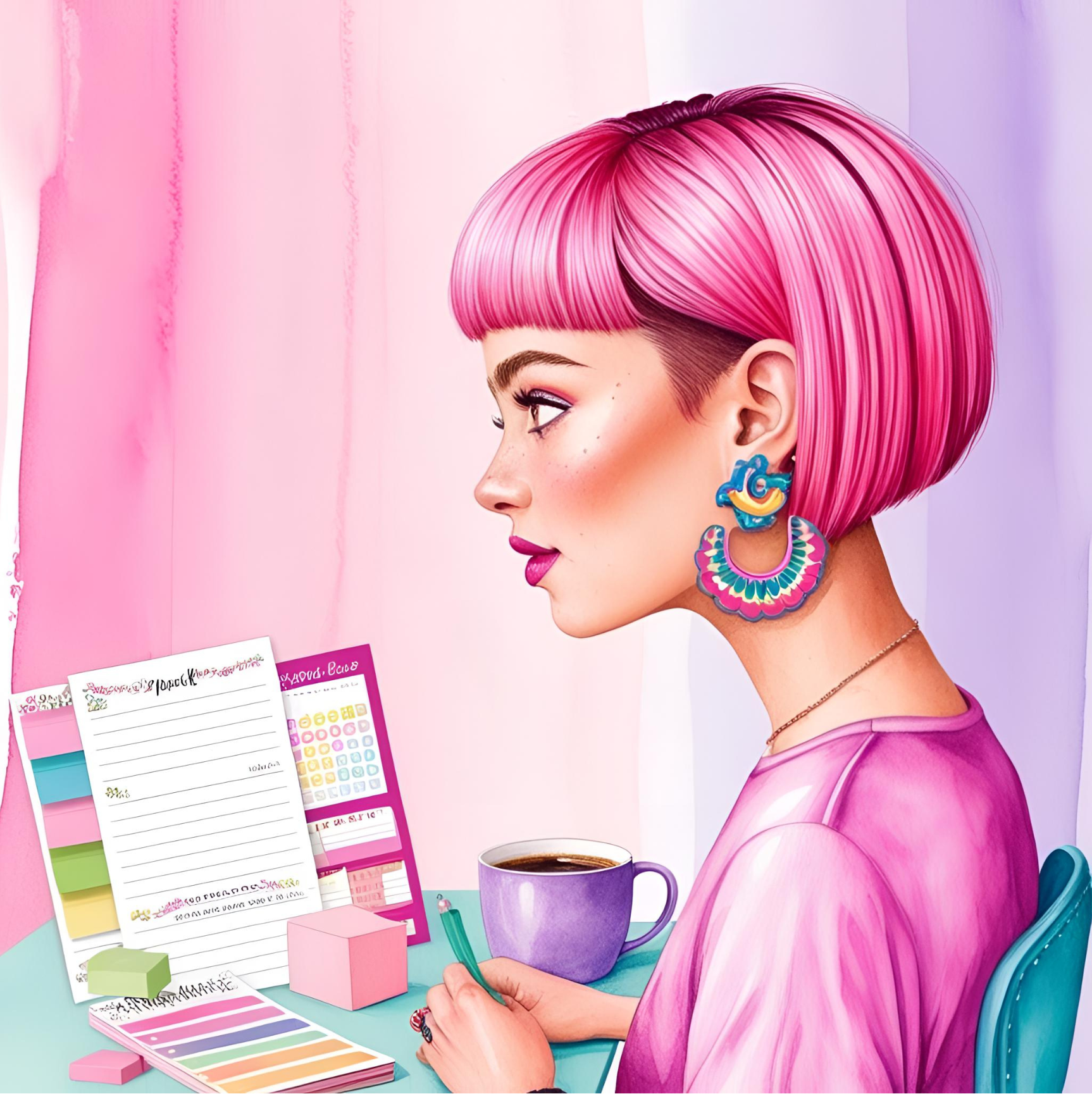
Real Tools & Strategies Created for ADHD Brains
Here you’ll find ADHD productivity tips for adults, ADHD-friendly routines, and organization ideas that don’t collapse the moment real life gets messy. Every strategy is built for dopamine-chasing, idea-sprinting, beautifully chaotic brains.
HyperFocus Pocus is all about ADHD productivity tips for adults who want practical, compassionate systems that actually fit real life — not the pretend, perfectly optimized version of it. Ready to start exploring? Let’s break it down.
ADHD Productivity Tips for Adults
When task initiation feels like climbing a mountain without coffee, you need systems that remove friction, not add more of it. These tips are designed to help you gently start, follow through, and regain momentum without burning out your dopamine supply.
Think of task initiation like standing at the edge of a cold pool — you know you’ll feel fine once you’re in, but your brain is still pacing the pool deck in a towel. Maybe it’s sending that email, switching the laundry, or opening the laptop even though you’ve already opened your soul to it three times today. The smallest tasks can feel like the biggest climb.
These ADHD productivity tips are built to work with your brain’s natural rhythms, not against them — because nothing derails progress faster than a system that fights your wiring.
What you’ll learn:
- How to start tasks without the internal wrestling match
- Small shifts that reduce overwhelm fast
- Energy-based planning that respects your capacity
- Dopamine-friendly habits that don’t fall apart by Tuesday
🔹 Want examples? Explore ADHD Time Hacks That Actually Work
ADHD Organization Tips That Actually Work
Organization isn’t about being “tidy.” It’s about reducing visual noise so your brain can breathe. It’s not just stuff — it’s like your surroundings start shouting suggestions at you from every direction.
These ADHD organization tips are shaped around the realities of adult life — busy schedules, fluctuating energy, and brains that sometimes forget where the keys are while still holding them. Because clutter isn’t just clutter — it’s like having 37 mental browser tabs open, all auto-refreshing, all asking for attention at the same time.
You’ll find:
- Visual systems that don’t require constant upkeep
- Low-effort routines you can build even on low-capacity days
- Gentle structure that makes starting easier
- Setups that calm chaos instead of creating more of it
🔹 For deeper ideas, try ADHD Organization Tips That Actually Work
ADHD Tools & Printables for Adults
These ADHD-friendly tools are simple, visual, flexible, and forgiving — because life happens, and your planner should understand that.
Every tool and printable here is made with ADHD adults in mind, offering flexible structure without the pressure to “do it perfectly.” Think of these tools as external working memory — a place for your brain to put all the things it shouldn’t have to carry alone.
These tools take the pressure off your brain so you can save your energy for things that matter, not remembering where your day is supposed to go.
Popular tools include:
- ADHD daily planners for imperfect days
- Hyperfocus trackers
- Brain dump worksheets
- Motivation and reward charts
- “Too Many Tabs Open” thought organizers
🔹 Want tools matched to your energy? Browse the Best ADHD Printables for Adults. Curious why the 6 planners you tried this year are collecting dust? Check out Best ADHD Planners for Adults That Actually Work.
Latest ADHD Productivity & Organization Guides
These guides are quick, relatable, and packed with ADHD-friendly productivity and organization ideas for adults who want tools they can actually use — not dense advice that ignores how your brain really works.
Think of these as quick dopamine hits of clarity: no fluff, no perfectionism, just real support for real ADHD brains.
-
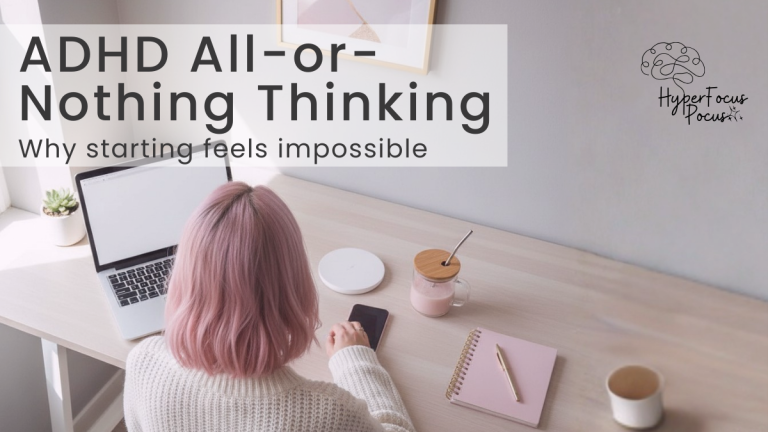
ADHD All or Nothing Thinking: Why It Freezes You in Place
If starting tasks feels paralyzing, it’s not laziness. ADHD all-or-nothing thinking can freeze you in place—and this post explains why.
-
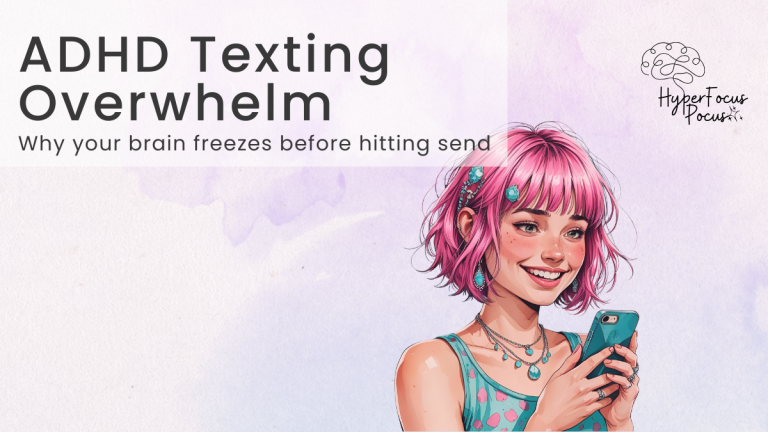
ADHD Texting Overwhelm: Why It Feels Hard (and What Actually Helps)
ADHD texting overwhelm makes replying feel far harder than it should. If texts trigger guilt, shutdown, or avoidance, this explains why—and what actually helps.
-
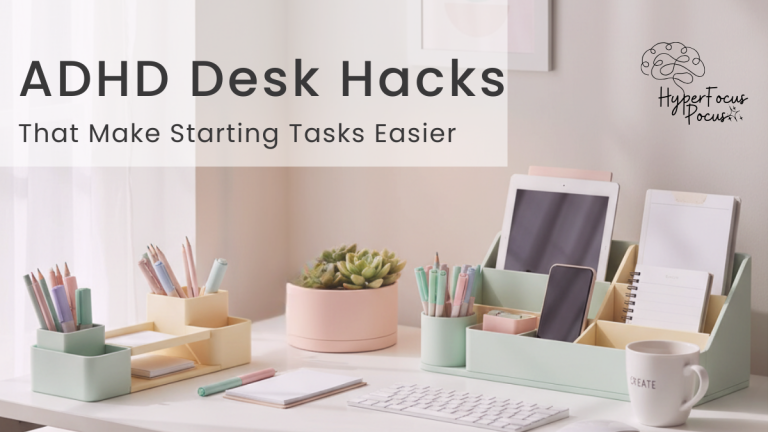
ADHD Work Desk Hacks That Make Starting Tasks Feel Less Impossible
Starting is the hardest part with ADHD. These desk hacks reduce friction with anchor objects, zone mapping, a visibility board, and a 5-minute start ritual.

If routines are something you circle back to again and again, go ahead and bookmark this page — everything here was made for the many-season journey of ADHD life.
ADHD Printables & Tools for Routines That Finally Stick
These simple, flexible tools are designed to support ADHD minds on days when focus is easy and on days when executive function packs up and leaves without warning.
These ADHD tools for adults are designed to help you build routines that feel intuitive and kinder to your brain — especially on days when focus decides to peace out.
They give you structure you can feel without ever feeling boxed in — kind of like a warm hand on your shoulder saying, “Hey, you’ve got this.”
Inside, you’ll find:
- Visual planning tools
- Gentle habit trackers
- Daily layouts that don’t demand perfection
- Worksheets for clearing the mental clutter
These aren’t aesthetic for the sake of aesthetic — they’re functional tools that make life feel lighter.
💜 Browse all ADHD Printables
Not sure where to start?
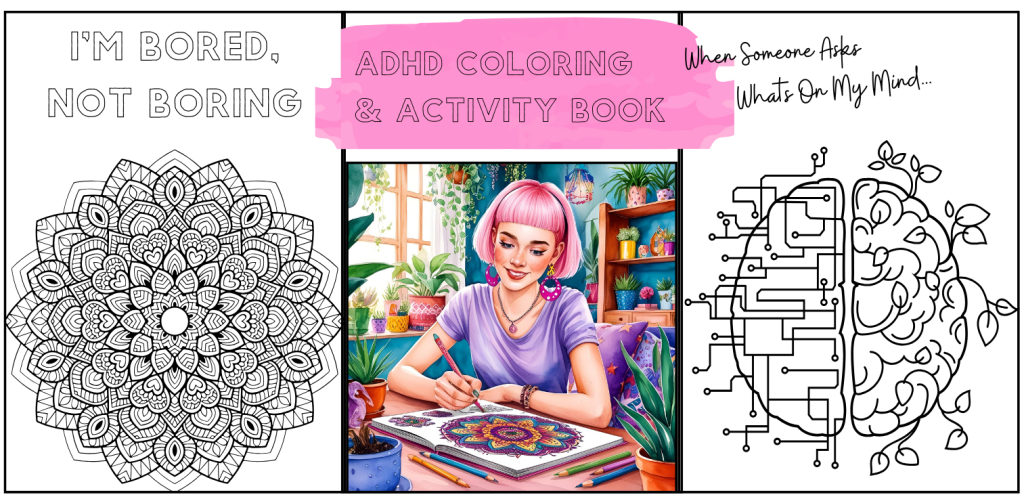
Try the ADHD-Themed Coloring Pages: Relax, Focus, And Embrace Your Creativity With Fun Designs!

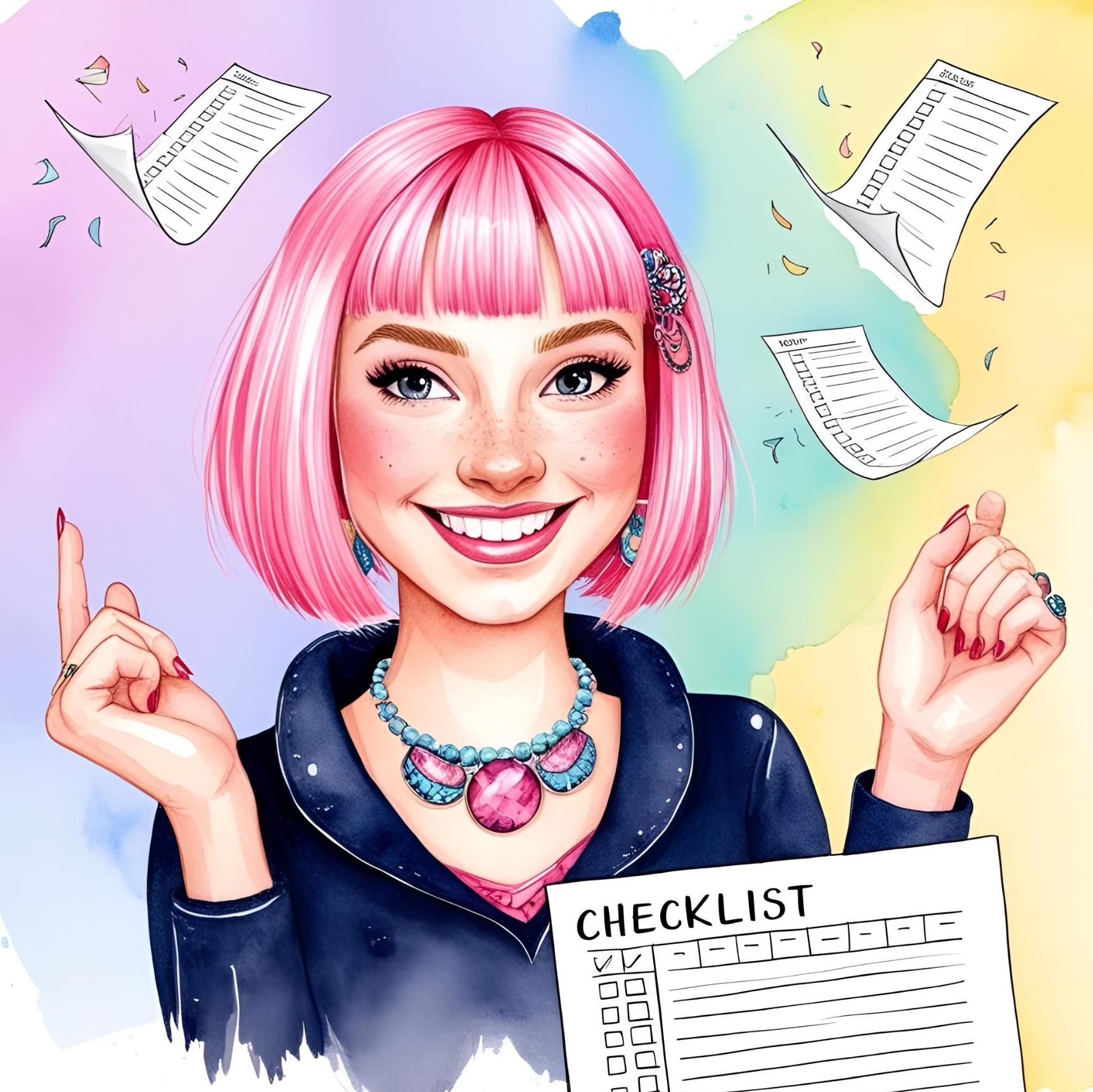
Meet Amy — ADHD Productivity Writer & Designer
Hi, I’m Amy — an adult with ADHD, a graphic designer, a chronic overthinker, and someone who has absolutely set reminders to check reminders.
If you’ve ever tried a “simple trick” you saw online and ended up spiraling instead of thriving, trust me — same. That’s why I make tools that feel doable, not demanding.
I create ADHD productivity tips for adults who want systems that feel human, flexible, and actually doable — even on the beautifully chaotic days.
I write for the adults like me who have tried every planner, app, and system… and finally want something designed for the way their brain actually works.
HyperFocus Pocus started because I was exhausted by advice that didn’t apply to people with fluctuating energy, time blindness, or a brain that turns “simple tasks” into epic quests. I wanted a place where ADHD adults could feel seen, supported, and actually helped.
If you’ve ever thought, “Why is this so hard for me?” — you’re not alone. And you’re not the problem. You can learn more about me and HyperFocus Pocus on the full About page.
Operating remotely on Pacific Time & supporting ADHD brains worldwide.
Frequently Asked Questions
Want Help Figuring Out Your Next Step?
ADHD brains thrive when the next step is simple, clear, and right in front of you. If you made it this far down the page (hi, fellow scroller), here are a few easy places to start:
💡 Get ADHD Productivity Tips That Actually Work
Learn simple strategies that help your brain start, follow through, and stay grounded.
→ Read ADHD Time Hacks That Actually Work
🧠 Build ADHD-Friendly Routines
Reduce visual noise, calm chaos, and create ADHD routines for adults that survive real life.
→ Read The ADHD-Friendly Morning Routine
📝 Download ADHD Printables for Adults
Flexible planners, brain dumps, hyperfocus trackers, and more — designed for beautifully chaotic brains.
→ Browse ADHD Printables & Tools
📒 Find the Best Planner for Your ADHD Brain
If planners have failed you before, let’s find one that finally works.
→ See The Best ADHD Planners for Adults