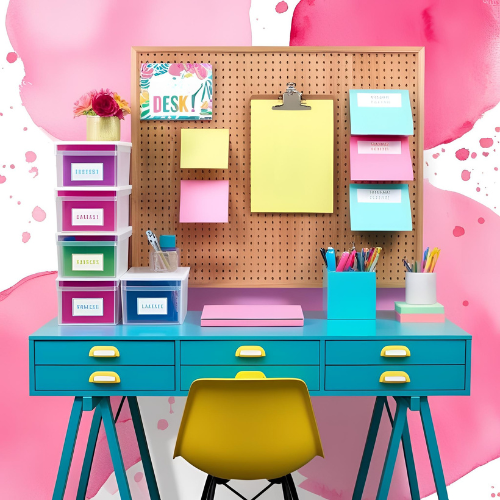
Best ADHD Desk Organizers to Transform Your Workspace
ADHD Desk Organizers That Make Focus Easier (Not Just Prettier)
If you’ve ever cleaned your desk, felt proud for ten minutes, and then watched it slowly slide back into chaos — you’re not bad at organizing. Your desk just wasn’t designed for an ADHD brain.
Most desk organizers look great in photos… and completely fall apart in real life. They hide things you need to see, add unnecessary steps, or turn “put this away” into a tiny executive-function obstacle course. Out of sight = out of existence for us.
These best ADHD desk organizers aren’t about perfection or Pinterest aesthetics. They’re about reducing friction, keeping essentials visible, and making it easier to start — even on low-energy days.
Think less “office makeover,” more brain support system.
This post includes affiliate links. If you shop through my links, I might earn a small commission (without any additional cost to you). Thank you for supporting this cozy corner of the internet for ADHDers!
Quick Picks: The Best ADHD Desk Organizers at a Glance
Best for
Visual Thinkers
Glass Desktop Whiteboard

Why it works for ADHD:
Best Small
Space Fix
Rolling Cart Organizer
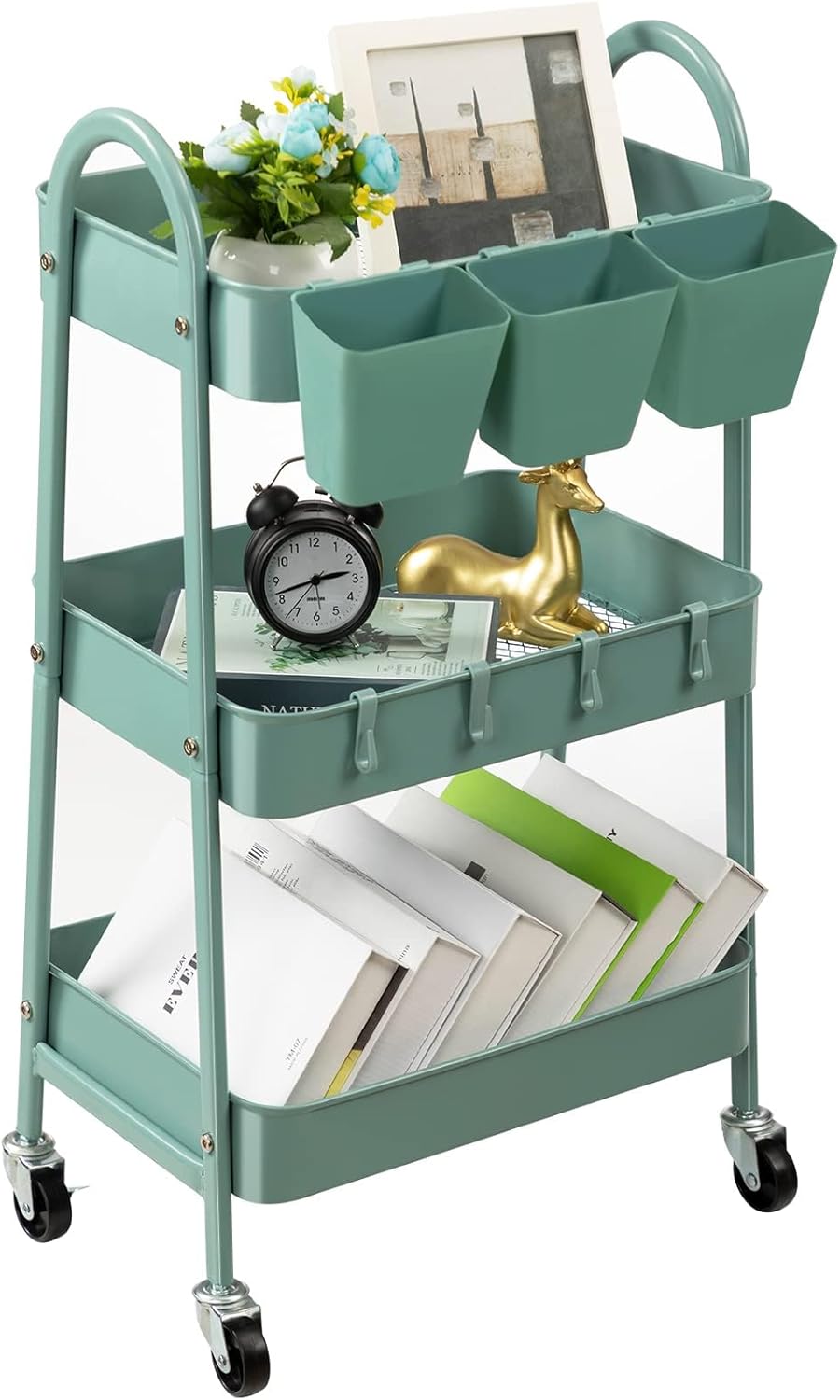
Why Adults with ADHD Love It:
Best Minimalist System
Modular Bamboo Tray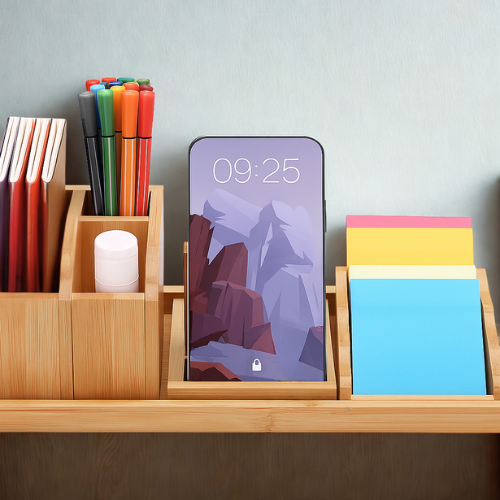
Why it boosts ADHD’ers Productivity:
Why ADHD Desks Get Overwhelming Fast (and How to Fix It)
If your workspace drains your focus before you even start, here’s why your setup might be working against your ADHD brain.
ADHD brains absorb stimulation like sponges. Every color, texture, and object competes for attention. That constant background chatter drains mental energy before any task begins.
Here’s what’s usually at play:
- Object permanence issues – If it’s out of sight, it’s basically gone.
- Decision fatigue – Too many organizing choices cause shutdown.
- Emotional attachment – Even random items can feel important.
- All-or-nothing thinking – “If I can’t do it perfectly, why bother?”
The fix isn’t more discipline — it’s better design. A good ADHD desk setup supports how your brain already works.
The sweet spot is this: → using tools that let your chaos breathe without letting it spiral.
ADHD Desk Organization That Actually Works for Visual Thinkers
When your desk is messy, it doesn’t just look messy — it feels noisy. For ADHD brains, visual clutter isn’t background information; it’s a constant stream of “notice me” signals pulling attention in every direction.
This is why traditional desk organization often fails for visual thinkers with ADHD. Hiding everything away might look tidy, but it removes the visual cues your brain relies on to remember what exists and what matters.
What’s actually happening under the surface:
- Object permanence issues – If something is out of sight, it’s effectively gone. Hidden storage leads to forgotten tasks and duplicate supplies.
- Decision fatigue – Too many organizing options (“Where does this go?”) can stop momentum before you even start.
- Emotional attachment to objects – That notebook, sticky note, or receipt feels important, which makes decluttering emotionally taxing.
- All-or-nothing thinking – If the setup can’t be perfect, it’s hard to begin at all.
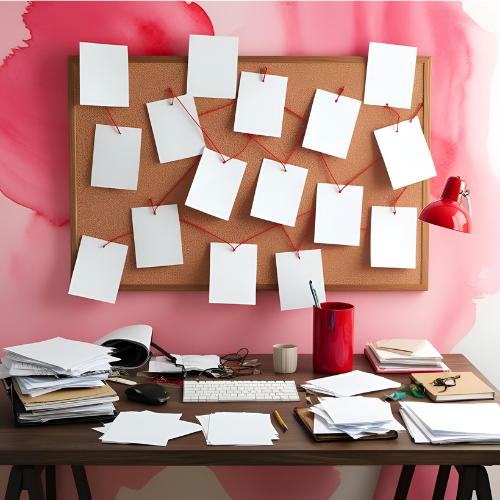
The goal of ADHD desk organization isn’t minimalism or aesthetic perfection. It’s designing a workspace that works with your brain instead of against it.
The right ADHD desk organizers keep essentials visible, accessible, and low-effort, so your desk supports focus without demanding constant maintenance. When your environment remembers things for you, your brain doesn’t have to work as hard — and starting becomes easier.
How to Set Up an ADHD-Friendly Desk
Before you add desk organizers, set yourself up for success. ADHD-friendly systems work best when they’re simple, visible, and low-effort.
Keep these principles in mind:
- Start small – Clear one visible zone
- Use visible containers – Hidden = forgotten
- Choose forgiving systems – One-step storage beats perfection
- Design for calm – The fewer decisions you make to stay organized, the more energy you have for actual work
For simple decluttering systems that pair well with these organizers, 👉 Top 5 ADHD Work Desk Hacks That Boost Focus
The 10 Best ADHD Desk Organizers (That Actually Help You Focus)
Most desk organizers promise a “clean workspace.” ADHD-friendly desk organizers do something more important: they make it easier to start, stay focused, and reset without effort.The picks below are designed to reduce friction, keep essentials visible, and support ADHD brains that struggle with object permanence, decision fatigue, and clutter overwhelm.
You don’t need all of them. One or two that match your brain is enough.This post includes affiliate links. If you shop through my links, I might earn a small commission (without any additional cost to you). Thank you for supporting this cozy corner of the internet for ADHDers!
1. Glass Desktop Whiteboard with Organizer

📌 Doubles as hidden storage for pens, sticky notes, and random office supplies.
The Brain Dump Zone
Best for:
Catching thoughts before they vanish mid-focus
Why It’s ADHD-Friendly:
Keeps reminders visible without relying on memory
How It Helps Focus:
Reduces mental load from holding tasks in your head
Quick Tip:
Wipe it clean at the end of each day to prevent visual fatigue
2. Vertical File Holders
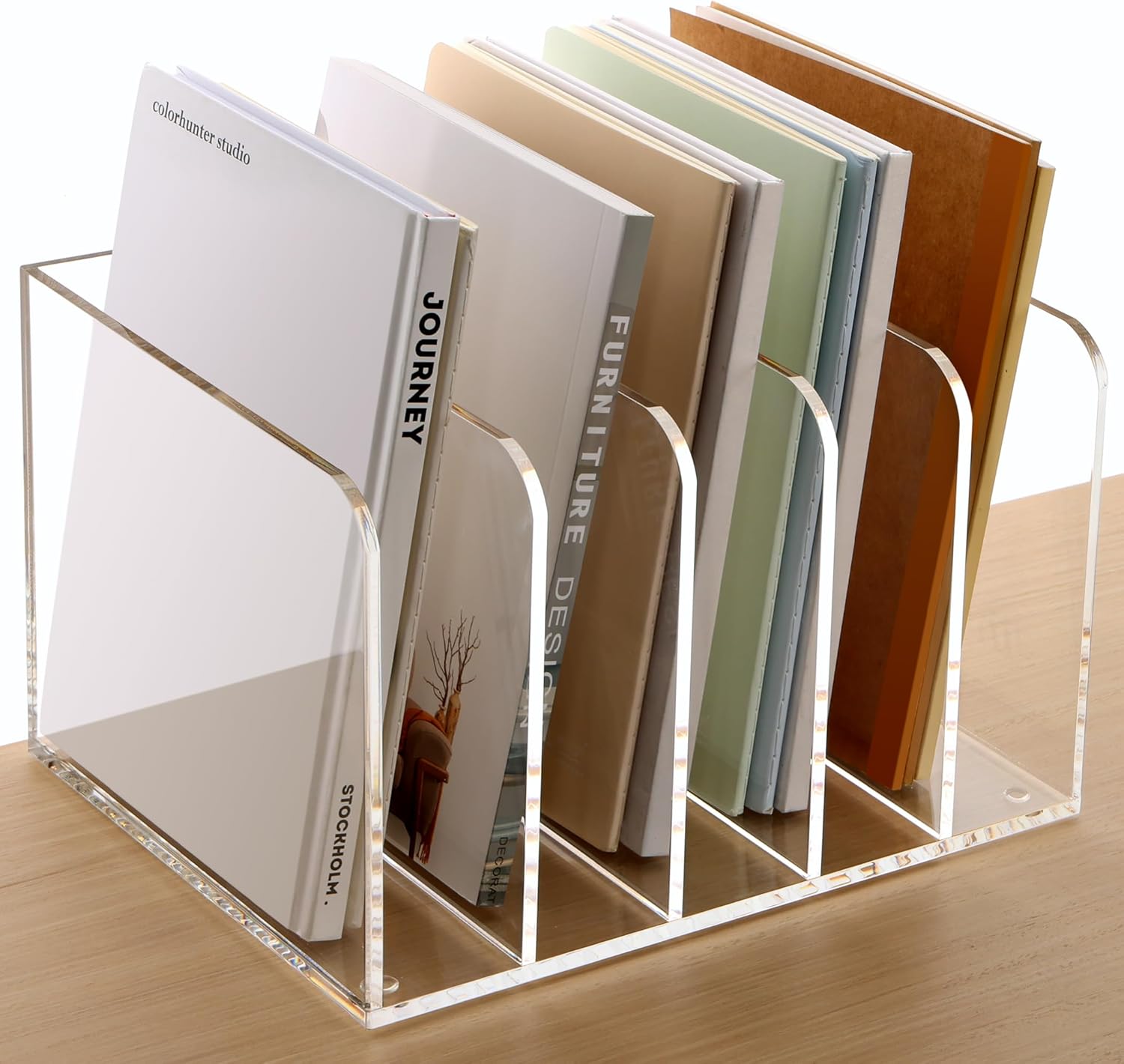
Visual Tabs for Real Life
Best for: Juggling unrelated piles — mail, forms, notes — that all need to stay visible but contained.
Why It’s ADHD-Friendly:
Your brain can quickly track what exists without getting overwhelmed by the stack underneath it.
How It Helps Focus:
Turning piles upright lowers visual noise and replaces chaos with simple categories.
Quick Tip:
Use each slot for a different “mental tab” — bills, forms, letters, ideas, things for next week. Chaos stays visible but finally has boundaries.
3. Rolling Carts
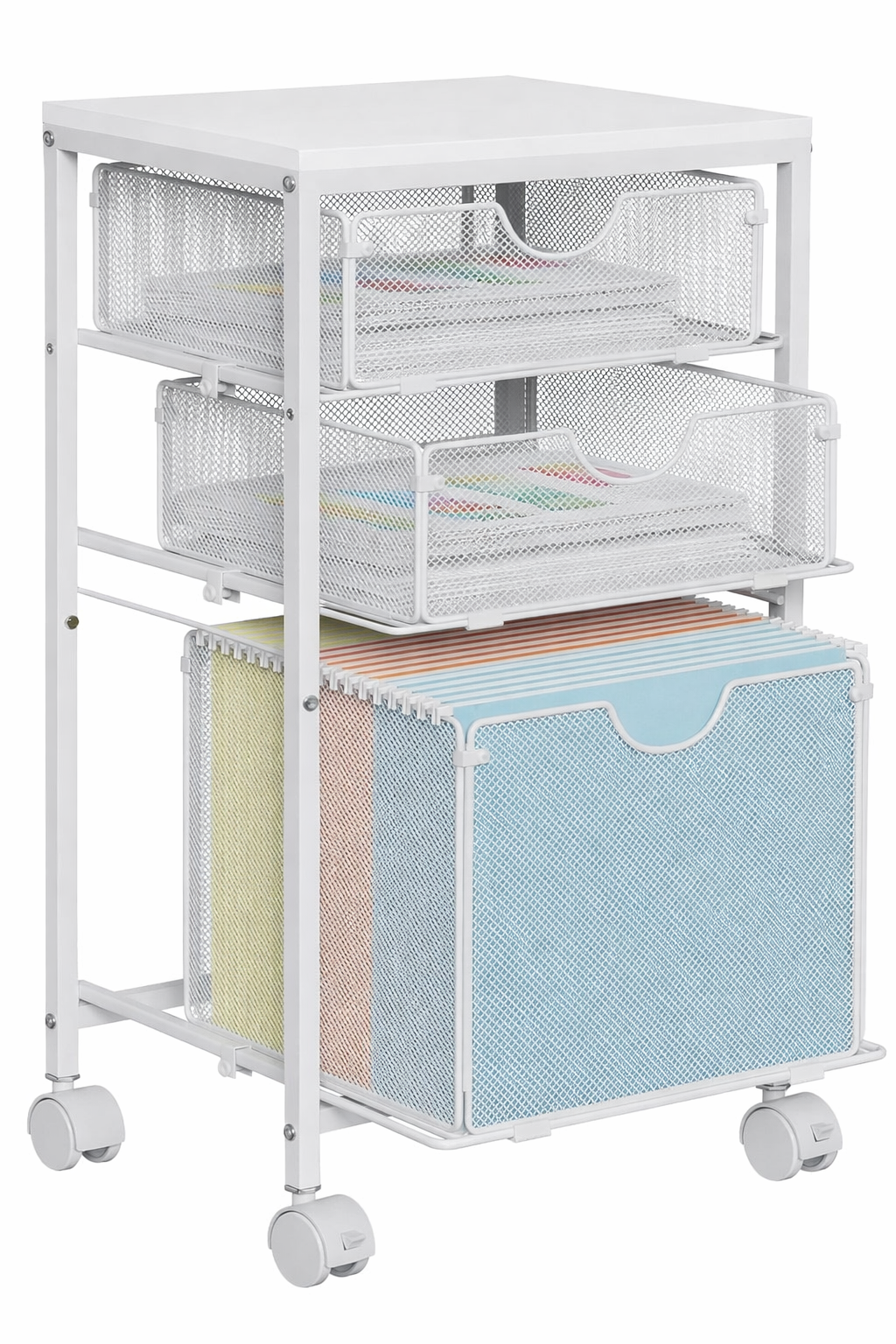
Your Mobile ADHD Desk Extension
Best for:
Anyone whose desk piles multiply until there’s nowhere left to work.
Why It’s ADHD-Friendly:
When clutter starts closing in, roll it aside. Everything stays close, just not staring at you while you try to focus.
How It Helps Focus:
You still know where everything is, but your workspace looks manageable again, which lowers that “I’m drowning in stuff to do” feeling.
Quick Tip:
Top = active projects, middle = pending, bottom = supplies. Rolling it away at day’s end signals: work mode off.

💌 Seeking more ADHD-friendly tools?
Explore my printable organizers to complement your new ADHD desk setup!
4. Open-Top Bins & Trays

📌 Consider it a “landing zone,” not a junk pile.
Simple Containment
Best for:
People who avoid complex systems and just need an easy drop zone.
Why It’s ADHD-Friendly:
No lids, no friction. You’ll actually put things away because it takes zero thought.
How It Helps Focus:
Trays keep items visible but defined, shrinking clutter’s footprint.
Quick Tip:
Dedicate one tray for pens, one for fidgets, one for “current chaos.” Empty weekly or whenever your desk feels noisy again.
5. Clear Drawer Units
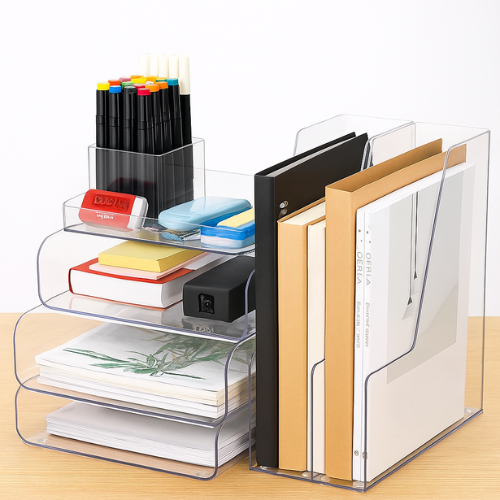
📌 Empty at the end of the week and keep only what you actually use.
Office Supplies at a Glance
Best for:
Those who crave tidy surfaces but lose track when things are hidden.
Why It’s ADHD-Friendly:
Transparent drawers create calm without invisibility.
How It Helps Focus:
You clear your desk while keeping cues visible — calm that still feels connected.
Quick Tip:
Label with verbs — Write, Sort, Send — to link storage to action.
6. Pegboards or Grid Walls
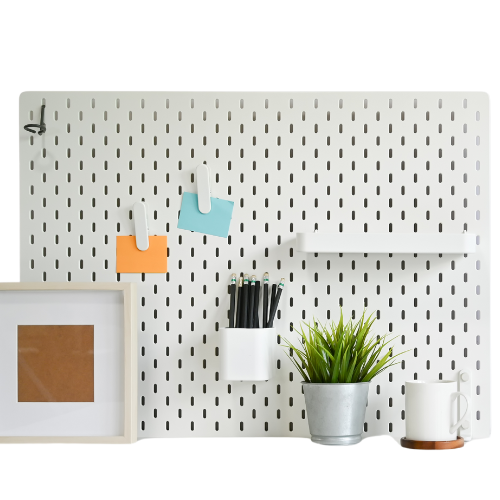
The Big-Picture Board
Best for:
Visual thinkers who need to see the bigger picture — not just store things, but think through them.
Why It’s ADHD-Friendly:
A pegboard turns your wall into a visual command center. It gives your thoughts room to sprawl — goals, notes, plans, reminders — all in one visible place. Instead of shuffling through piles, you can literally step back and see how it all fits together.
How It Helps Focus:
By externalizing your thinking, you reduce mental load. You don’t have to hold everything in working memory because your priorities are right in front of you.
Quick Tip:
Pin essential reminders and active projects in one zone, and rotate them out weekly. That way your wall stays current and your brain doesn’t tune it out.
7. Cable Management Box
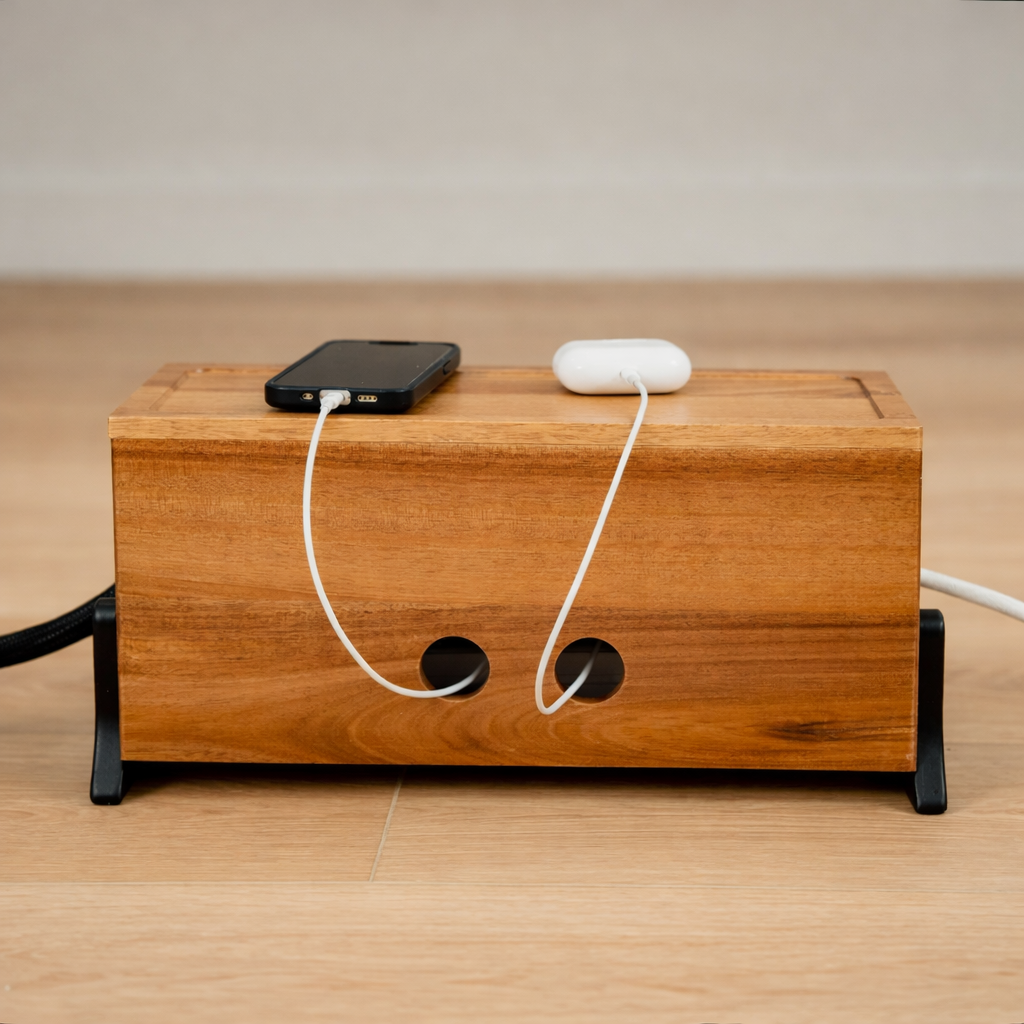
Cord Control
Best for:
Anyone who can’t focus with cords tangled, visible, or creeping into their peripheral vision.
Why It’s ADHD-Friendly:
Cables are the silent saboteurs of visual calm. They grab attention every time you look up, pulling focus and adding low-level stress you don’t notice until it’s gone. A simple management box hides the chaos while keeping everything easy to reach.
How It Helps Focus:
Eliminating cord clutter removes one of the biggest sources of visual distraction in an ADHD workspace. The cleaner the lines, the calmer your brain feels.
Quick Tip:
Bundle cords by function—charging, computer, lighting—and label or color-tag each one. Future-you will thank you when something needs unplugging fast.
8. Modular Bamboo Organizer
Effortless Organization
Best for:
People who want everything in sight but not spread everywhere.
Why It’s ADHD-Friendly:
This modular bamboo tray system gives your essentials a clear home without overcomplicating things.
How It Helps Focus:
Defined zones reduce decision fatigue and stop small items from drifting into chaos. You can see what you need at a glance, which helps your brain stay on task.
Quick Tip:
Place high-use tools on the outer edge; stash occasional items toward the center.
9. Drawer Dividers
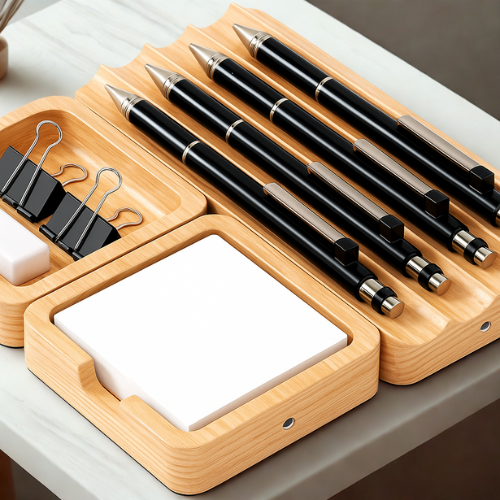
Simple, Visible Order
Best for: People who want order but can’t stand sterile, corporate-looking organizers.
Why It’s ADHD-Friendly:
The modular design keeps essentials contained but visible, so you know exactly where things live. The felt lining reduces noise and adds a soft texture that’s grounding and easy on the eyes.
How It Helps Focus:
Defined spaces help your brain sort information visually. Instead of scattered items competing for attention, each piece has a calm, predictable spot.
Quick Tip:
Keep similar tools grouped together — writing, notes, small accessories — and stick with that setup. Familiar layouts train your brain to find what it needs faster.
10. Desktop Shelf Riser
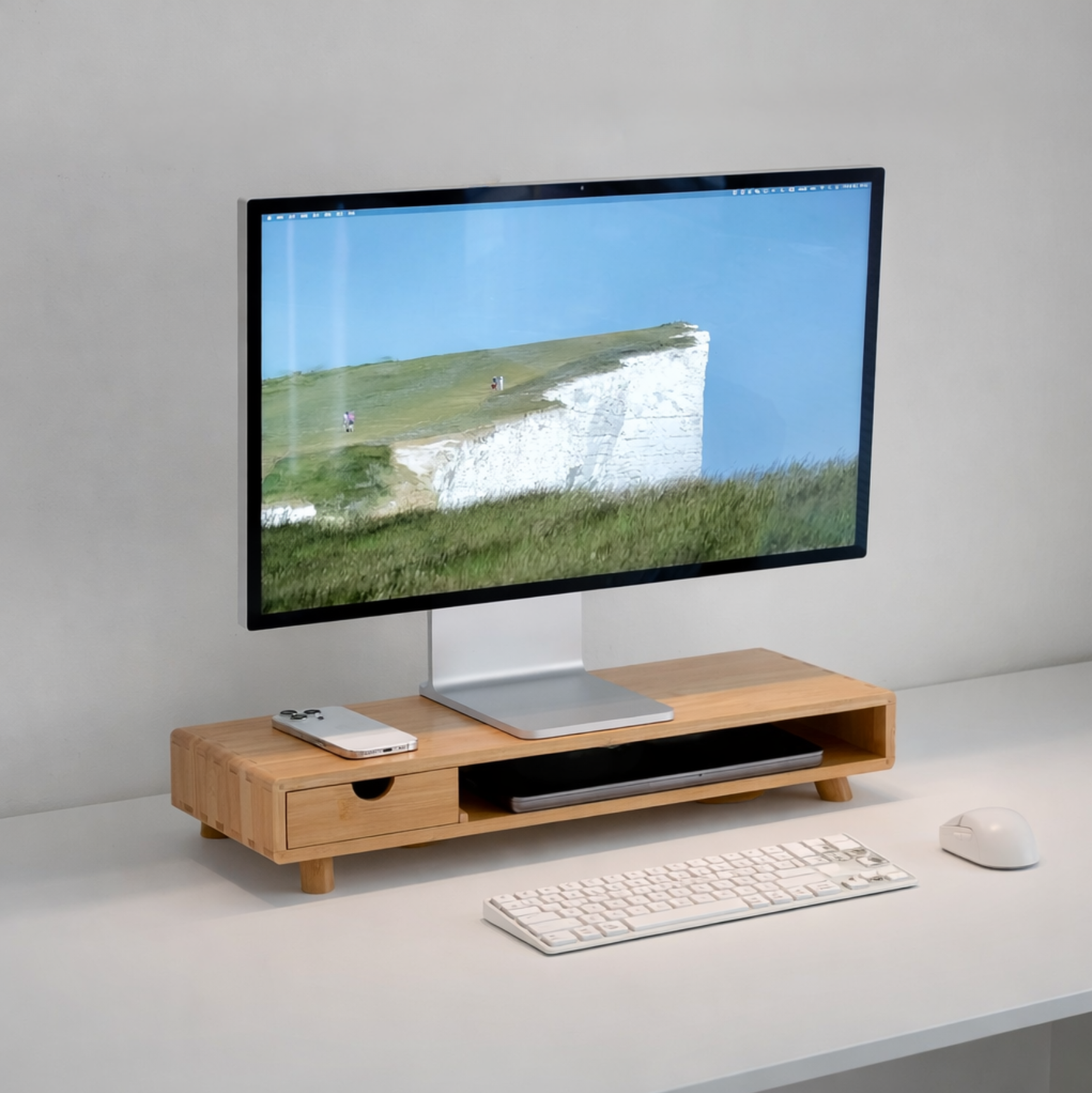
Create More Space
Best for:
Anyone who feels boxed in by piles and needs a little breathing room.
Why It’s ADHD-Friendly:
Raises your monitor, clears visual clutter, and reclaims space underneath.
How It Helps Focus:
A higher sightline reduces distraction. When your screen rises, so does your concentration.
Quick Tip:
Pair with the → desktop whiteboard by sliding it underneath the riser.
Simple ADHD Desk Setup & Organization Hacks
Think of these hacks as “brain shortcuts,” not chores. They exist to help your prefrontal cortex outsource the boring stuff so your creative chaos can shine.
Pick a few tips that resonate with you and stack them to form a personalized system.
✅ Color zones → assign colors to categories (blue = work, green = personal).
✅ Give ADHD office supplies designated homes → one object = one home (mug = pens, tray = unsorted papers), pegboard = time sensitive papers)
✅ 5-minute desk reset → Put office supplies back in their homes at a set time (like during stretch breaks, at the end of the day, or at the end of the week). Your future self will thank you for the head start.
🪄 Before You Go: Small Wins for Your ADHD Workspace
If your workspace still looks like a craft store exploded — that’s okay. ADHD brains crave visibility and novelty, not perfection. Start small: pick one ADHD desk organizer that actually makes you want to sit down and focus. The goal isn’t a spotless setup — it’s a system your brain can live with on its messiest days.
👉 Next read: Best ADHD Planners for Adults That Actually Work — because your desk deserves a planner that speaks fluent dopamine.